Oil Paint & Studio Safety
Oil Paint & Studio Safety
Oil painting can be used safely in a home or studio when materials are chosen carefully and used as directed. The important thing is not to assume that every oil colour, medium or solvent has the same safety profile. Always read the product label and Safety Data Sheet (SDS) for the specific materials you are using.
Are oil paints toxic?
Oil colour is generally made from pigment dispersed in a drying oil, but the hazards depend on the exact pigments and other ingredients in the product. Some colours and specialist materials may carry health or environmental warnings. Never assume that a paint is harmless simply because it is an artist material.
Do not eat, drink or smoke while painting, avoid putting brushes in your mouth, wash your hands thoroughly after use and keep paints away from children and pets. Take particular care if sanding, spraying or otherwise creating airborne particles or mist, as this can introduce a different exposure risk.
What about solvents such as white spirit and turpentine?
Solvents require more care. Vapour can be inhaled, liquid solvent can irritate or affect the skin and eyes, and many solvents are flammable. 'Low odour' or 'odourless' does not automatically mean risk-free.
If you use a solvent, choose a product intended for artists, keep the container closed when it is not in use, use only the amount you need and work with good ventilation. Do not use solvent to clean paint from your skin. Always follow the label and SDS for ventilation, storage, protective equipment and disposal.
Can I paint without solvents?
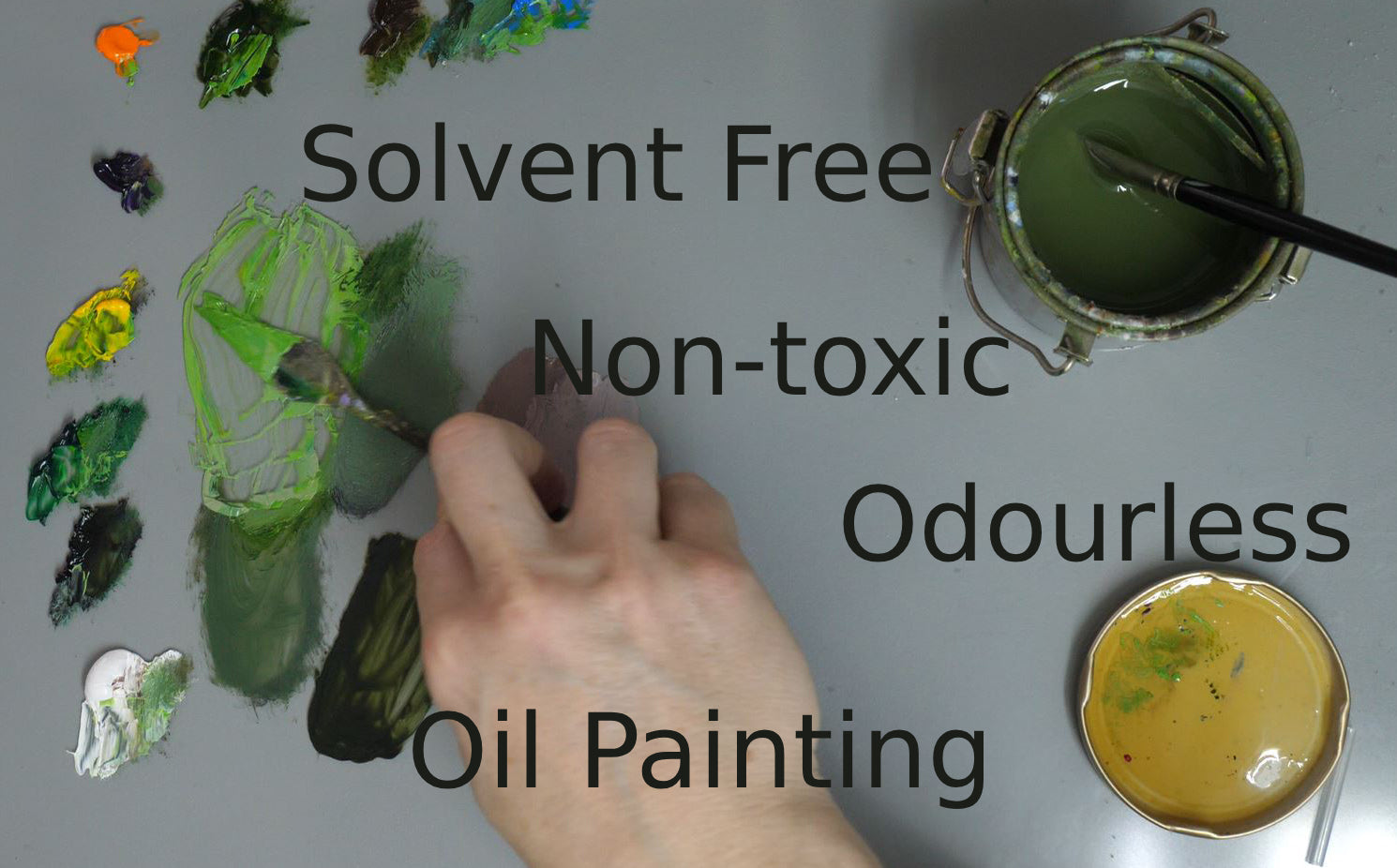
Yes. Many artists work partly or completely solvent-free. Oil colour can be used straight from the tube, and there are oils and solvent-free painting mediums designed to alter flow and handling. These materials still need to be used according to their instructions, as 'solvent-free' does not mean that every product can be used without limits.
Do natural or plant-based products automatically mean safer?
No. A product being described as natural, citrus-based, plant-based or pleasantly scented does not by itself establish that it is safer to breathe, touch or dispose of. Check the safety information for the exact product rather than judging it by its smell or ingredients alone.
How should I clean brushes?
First remove as much paint as possible with a cloth or paper towel. Then use a cleaner suitable for the paint system you are using, following its instructions. Depending on the materials, this may involve an artist's solvent, oil-based cleaning method, soap and water, or a dedicated brush cleaner. Keep cleaning containers covered when possible and never use solvents on your hands.
Ventilation
Fresh-air ventilation is particularly important when using volatile solvents or other products that release vapour. The amount of ventilation needed depends on the product, quantity being used and the size of the space. If a label or SDS calls for specific ventilation or protective measures, follow that guidance.
Paint rags and fire safety
Rags or paper containing drying oils can present a fire risk if they are left crumpled together. Do not leave oily rags piled up in the studio. Store, dry and dispose of them in accordance with the oil or medium manufacturer's instructions and your local waste guidance.
A simple studio-safety routine
- Read labels and SDS information before using unfamiliar materials.
- Use the least hazardous material that will achieve the result you need.
- Keep lids on solvents and mediums when they are not in use.
- Maintain suitable ventilation.
- Avoid prolonged skin contact and wash hands after painting.
- Keep food and drink away from the painting area.
- Keep art materials securely away from children and pets.
- Dispose of paint, solvent and oily waste responsibly.
Good studio practice is less about whether a product has a noticeable smell and more about understanding the specific material you are using and following its safety instructions.