How to Paint Fine Details and Grass Using Rigger Brushes 🎨
Fine grass, twigs, branches and other delicate details can be difficult to paint with an ordinary brush. A Rigger Brush is designed to hold a fine point while carrying enough paint to create controlled, narrow lines.

Preparing the paint and brush
Load the brush carefully and roll or turn it through the paint to bring the hairs to a fine point. The correct consistency depends on the mark and the surface beneath it: the aim is for the paint to leave the brush cleanly without flooding the line or breaking apart.
Painting realistic grass
- Establish the main darker masses before adding individual blades.
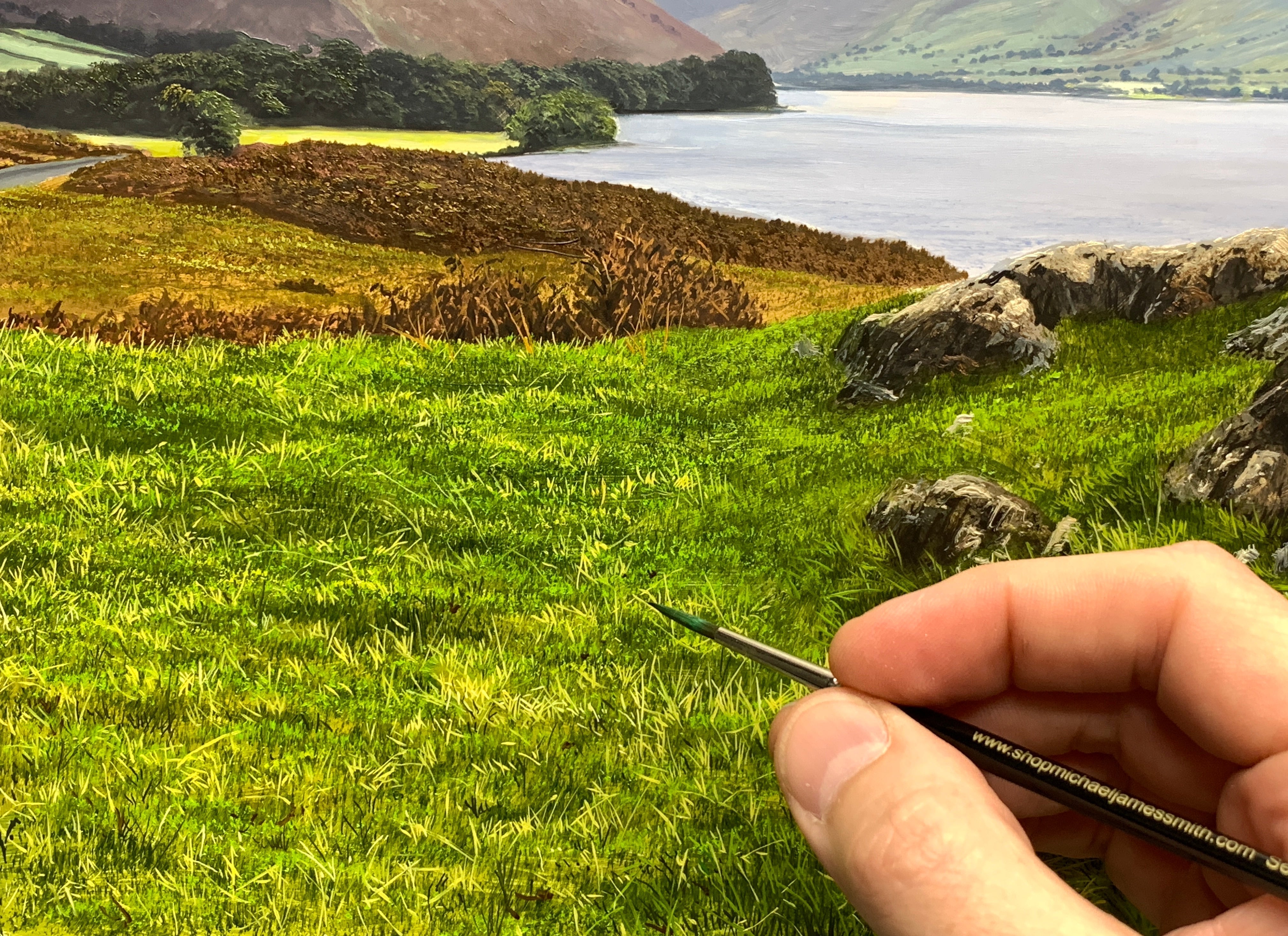
- Use the very tip of the Rigger and work with a light touch.
- Use short, controlled touch-and-lift strokes rather than drawing every blade as a long line.
- Vary the angle, length, thickness and spacing so the grass does not become repetitive.
- Add only selected lighter blades towards the end to bring the foreground forward.

Rigger vs Dagger Brush
The Rigger excels at very fine controlled lines. A Dagger Brush can produce a broader, more blade-like mark and is useful when you want more variation within a single stroke. Both are useful; choose the one that matches the scale and character of the detail you are painting.
Technical Exercise: How to Paint Fine Lines

In this exercise I demonstrate how to load the brush, form a fine point and apply controlled strokes for grass, branches and other delicate details.
👉 Shop Series 1 Rigger Brushes
👉 Shop the 6 Piece Rigger Brush Set
👉 Shop the Super Fine Rigger Brush Set
Happy painting!